A safe ibogaine provider is basically a small hospital, even if it also looks like a luxury resort. That means a 12-lead ECG and bloodwork is done before you go. It also means having a physician physically on site, continuous cardiac monitoring during treatment, ACLS-trained staff with resuscitation equipment in the room, monitoring that continues for days, and a real plan for emergencies.
Every one of those items is checkable before you commit. An ibogaine provider missing any of them is asking you to carry risk that our modern understanding already knows how to remove.
Because ibogaine is unregulated in the places most people go for it (like Mexico), there is no license that separates a serious clinic from a rented villa with a website. That absence of regulation does not mean safety is unknowable. It means the checking falls to you. The good news, and I mean this sincerely after interviewing providers across the spectrum: the difference between serious and dangerous will be apparent with some simple questions you can ask them from your home, if you know what to ask.
The non-negotiables
These are the items published safety guidelines and every credible clinician agree on.1 Treat them as pass-fail:
- A 12-lead ECG before acceptance, with a QTc calculated. Ibogaine prolongs the heart's QT interval; the entire point of screening is to find the people for whom that is deadly before dosing them.
- Full bloodwork, with time to correct it. Potassium, magnesium, liver and kidney function. Low electrolytes amplify the cardiac risk and are common in people coming off opioids and alcohol. A real protocol tests, corrects, and retests.
- A physician physically present. Not on call. Not reachable. Present, and experienced with ibogaine specifically.
- Continuous cardiac monitoring during treatment. A monitor with someone qualified watching it, through the acute phase and beyond.
- ACLS-trained staff and resuscitation equipment in the building. Defibrillator, emergency medications, oxygen, and people certified to use them. Arrhythmias are survivable when the response starts in seconds.
- Monitoring that continues for days. Noribogaine keeps stressing the heart after you feel normal. Discharge hours after the experience ends is a red flag dressed as efficiency.
- A written opioid protocol. If you are coming off opioids, they must manage the switch from long-acting drugs and the timing of your last dose. Improvising this is how people die. See the preparation guide.
- A real hospital plan. Distance in minutes, a relationship with the facility, and a story of the last time they used it. Serious providers have transferred someone and will tell you about it.
The questions that expose a weak provider
Ask these, and listen for specifics:
| Ask this | A strong answer sounds like | Walk away if you hear |
|---|---|---|
| Who reviews my ECG, and what would disqualify me? | A named physician and a list of disqualifying conditions | "We've never had to turn anyone away" |
| What happens if my heart goes into arrhythmia at 3 a.m.? | A step-by-step emergency protocol, named roles, equipment in the room | "That's never happened here" |
| How do you dose? | Milligrams per kilogram of pharmaceutical-grade HCl, adjusted to screening results | "We dose intuitively" |
| How long am I monitored after? | A number of days, with cardiac monitoring, and why | "Most guests feel great by the next morning" |
| What aftercare do you provide? | A structured program, named integration staff, scheduled follow-ups | "The medicine does the work" |
Notice what these questions have in common: none of them can be answered well by marketing. They can only be answered well by an operation that actually does these things daily.
Red flags that end the conversation
Any one of these, on its own, is enough: guarantees of success or claims that ibogaine is "100 percent safe when done right." No medical screening before a deposit. Pressure to book fast because "spots are filling." A provider who will not name their physician or let you speak with them if feel the need. Dosing root bark or unmeasured extract for detox (the reasons are in iboga vs. ibogaine). Hostility toward your questions. The serious providers I have interviewed welcome hard questions, because those questions are how they distinguish themselves from the operations giving their field a bad name.
Beyond the medical: the rest of what you are buying
Once the medical floor is established, the differences that matter most are human. Who prepares you in the weeks before, and how? Who sits with you during the experience? What does the somatic and psychological support look like around the medicine? What does aftercare actually consist of once you are home, and what happens a month after should you still need help? A provider strong on monitoring but absent on preparation and integration is only doing half the treatment. You are not buying a drug experience. You are buying a container, and the container is most of what you are paying for, a point that matters again when you read what treatment costs.
Of everything within your control, provider choice moves your actual risk the most. Screening, monitoring, and trained response are the difference between a manageable medical event and a serious incident. Pay for those things specifically, and verify them before you commit to anyone.
Key takeaways
- Provider choice is your biggest safety lever. The risk concentrates almost entirely in who treats you.
- Eight non-negotiables, all checkable: ECG, bloodwork, physician on site, continuous monitoring, ACLS staff and equipment, multi-day observation, opioid protocol, hospital plan.
- Ask questions marketing cannot answer. Strong providers answer with specifics; weak ones answer with reassurance.
- Any single red flag is enough to walk away. There are good providers; you do not need to gamble on a bad one.
- The container is the product: preparation, support during, and structured aftercare are part of what you are vetting.
Frequently asked questions
Is ibogaine treatment in Mexico safe?
Mexico is where most treatment happens because ibogaine is unscheduled there, and the country contains both the best clinics in the world as well as sketchy ones that make news articles. The location tells you nothing; the protocol tells you everything. Vet the specific provider against the non-negotiables.
How long should a clinic monitor me after treatment?
Days, not hours. Noribogaine, the long-lasting metabolite, keeps prolonging the QT interval after the experience ends, so credible providers keep cardiac monitoring going well past the point where you feel normal, commonly available for 72 hours or more depending on your case.
Are there official certifications for ibogaine clinics?
No government certifies ibogaine providers. The closest things are published clinical guidelines, like the Global Ibogaine Therapy Alliance's 2015 guidelines, and reputation within the clinical and research community. That is why direct questioning matters so much.
Should someone come with me?
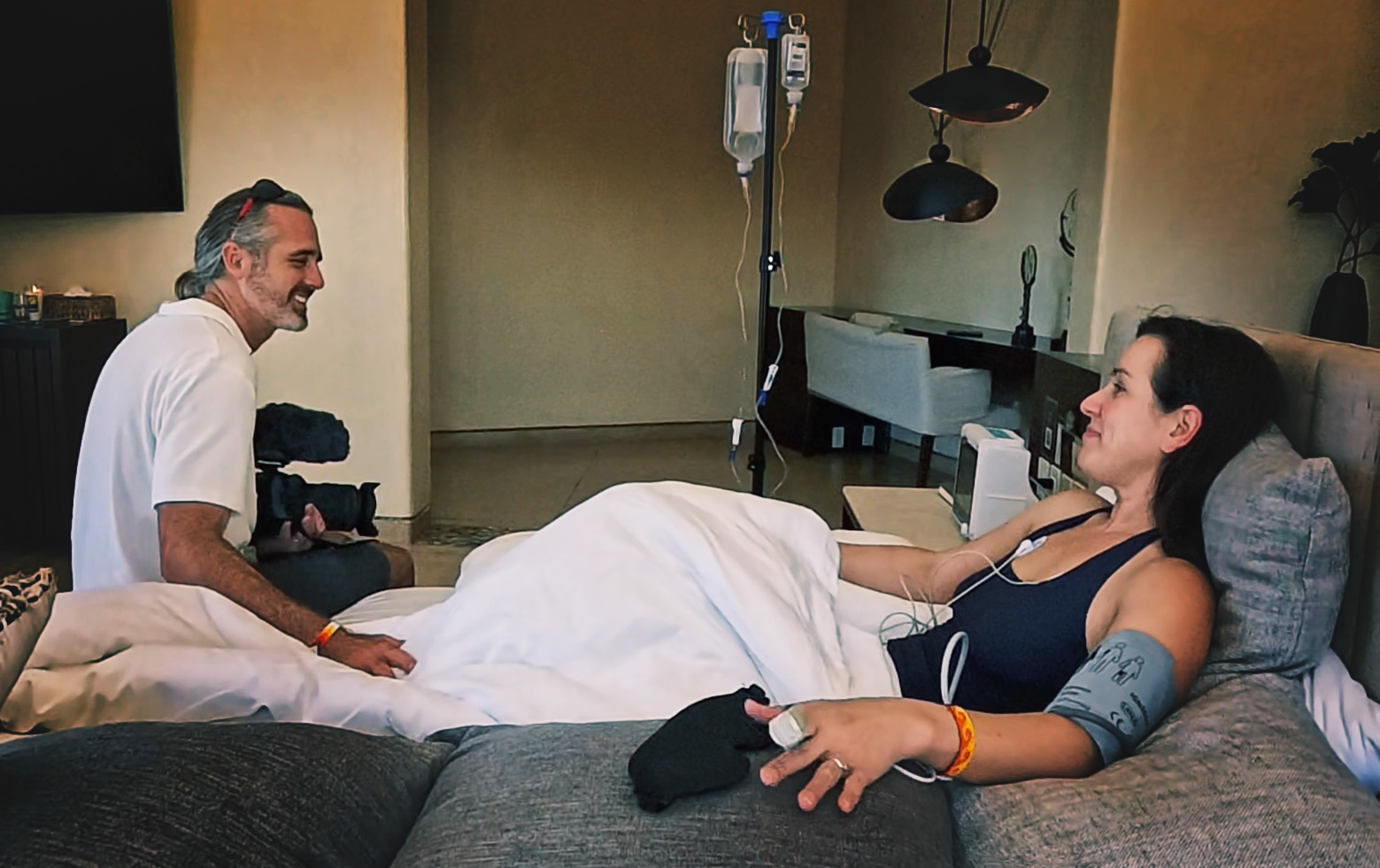
If you can, yes. A trusted companion adds a second set of eyes, helps you evaluate the provider honestly, supports you through the exhausting days after, and gets you home safely. Good providers welcome companions and as Haley and I discovered in our ibogaine documentary, it really was the hack for creating an incredible experience.
Sources I Used
- Clinical guidelines for ibogaine-assisted detoxification. By the Global Ibogaine Therapy Alliance
- Fatalities temporally associated with the ingestion of ibogaine. By Alper in the Journal of Forensic Sciences
- Koenig's article "The anti-addiction drug ibogaine and the heart: a delicate relation. In the journal Molecules