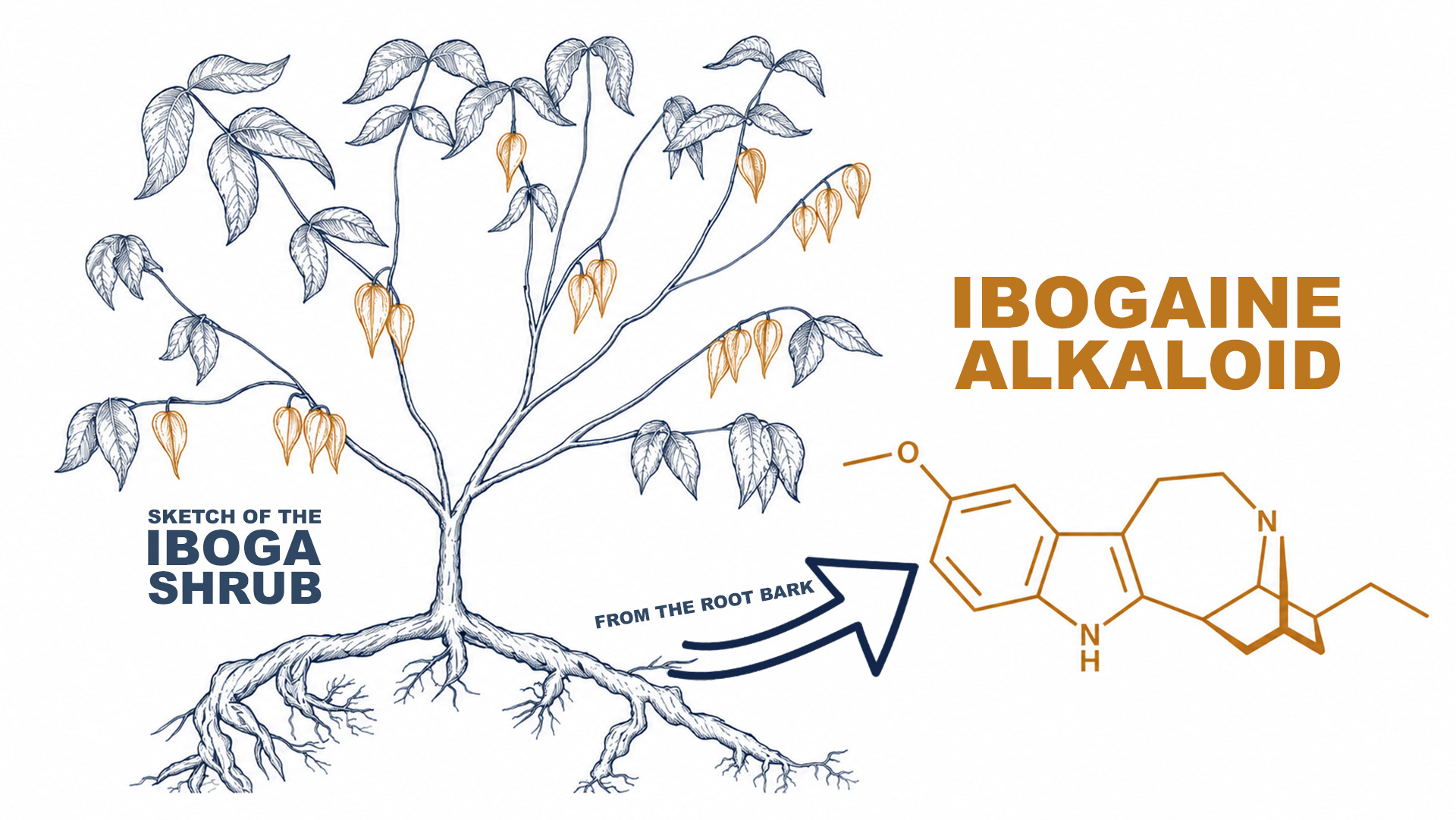
Ibogaine is a naturally occurring psychoactive alkaloid extracted from the root bark of Tabernanthe iboga, a shrub native to Central and West Africa. It's best known in Western medicine today for its ability to interrupt opioid addiction, often eliminating withdrawal in a single treatment. It's also known for producing an intense 18-to-36-hour introspective experience.
While it carries real cardiac risks, modern research has shown that using proper protocols, screening and dosing will make the risks extremely small. However, because there is no current vetting program for retreats, you’ll need to do some of that yourself. This guides you through it.
That's the basics of ibogaine. It's what you can tell your friends around a dinner table. But if you're here, you're probably not looking for just the simple answer. Maybe you're considering ibogaine for yourself. Maybe someone you love is. Maybe you just watched a video, like the ibogaine documentary below, and thought: wait, a single dose does that?
I know how odd this seems. I'm a biologist who has spent 25 years now reporting on complex topics just like this one, trying to explain them better. What you'll find here is, I hope, the most comprehensive plain-language picture of what ibogaine really is. Not because I'm the world's foremost expert on it (though by this point I'm not far off), but because I spent the better part of this year talking with the ibogaine researchers, practitioners and clinicians whose answers I couldn't find anywhere when we started our documentary.
All I could find back then were scattered anecdotes, clinic websites with obvious financial interests, and scientific papers written for other scientists. There was one somewhat dry ibogaine course for clinicians. That's it. That's a hard place to be when the stakes are this high. The ibogaine course we created is our attempt at the honest foundation we wish we'd had, with no agenda about what you should do with it. But before any of that, the basics are worth diving into. So here they are.
The RootsWhere ibogaine comes from
Ibogaine is not a lab created compound like LSD or 2CB, even though it can be synthesized these days. It comes from iboga, a small shrub used for centuries, possibly millennia, in the Bwiti spiritual traditions of what is now Gabon, Cameroon, and the Republic of Congo. In Bwiti ceremony, iboga is taken in large doses during initiations that can last days. It is understood as a journey to meet one's ancestors and confront the fundamental truths of one's life. It's called the plant of truth. The medicine and the ceremony are not separate things there. They are one thing.
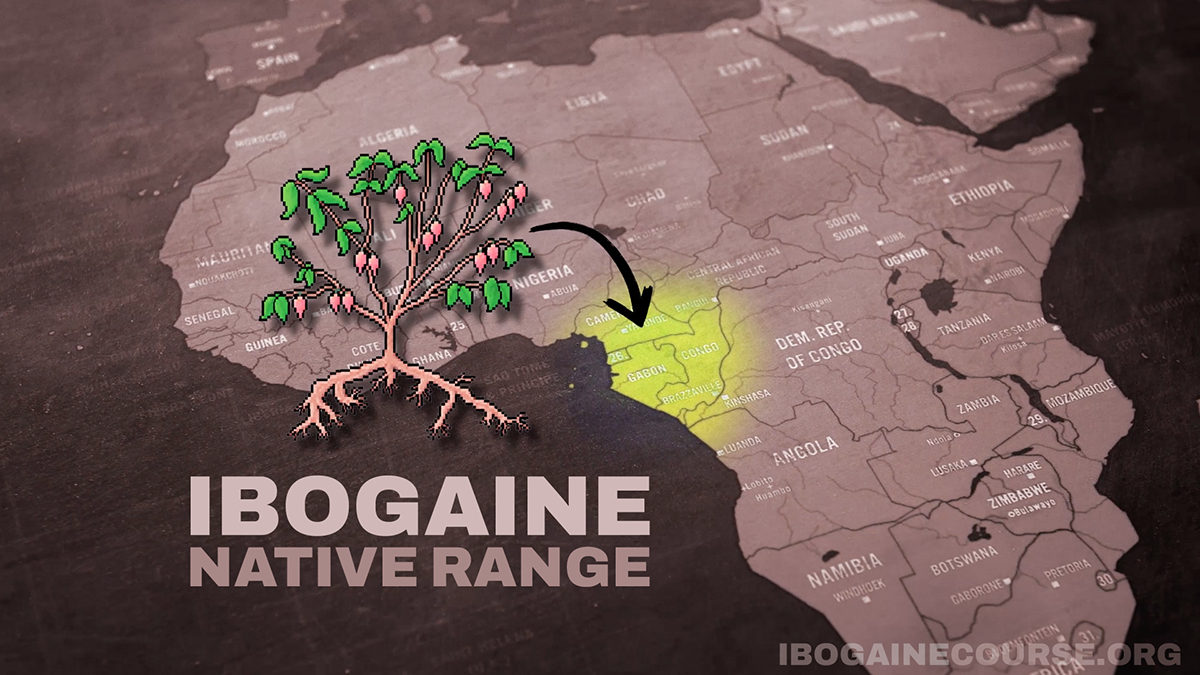
Western science isolated ibogaine from the plant in 1901, but it entered Western awareness as an addiction treatment in the 1960s, almost by accident. A young man named Howard Lotsof took it while dependent on heroin and noticed something remarkable: he no longer wanted to take heroin and had no withdrawal symptoms. He spent the rest of his life trying to get the world to pay attention.
I bring up these two historical sides to ibogaine for a reason. The accidental discovery for use for addiction is why research on that is farther along than any other study. The Bwiti emphasis on ceremony, preparation, and community may reflect something real about how ibogaine works best. They’ve tried and tested it for a very long time. It is also a living tradition that deserves acknowledgment from everyone who benefits from this molecule.
The ScienceWhat ibogaine does in the brain
Chemically, ibogaine is an indole alkaloid in the tryptamine family, the same broad class as serotonin, DMT, and psilocybin. But that's roughly where the family resemblance ends. Classical psychedelics work mainly through only one serotonin receptor, 5-HT2A. Ibogaine is far dirtier (as researchers describe it). It interacts with opioid receptors, serotonin transporters, NMDA receptors, sigma receptors, and several others at once. That multi-target activity is likely why its effects, both the therapeutic ones and the risky ones, are so different from simpler compounds.
Then there's noribogaine, which ibogaine breaks down into, and which is stored in fatty tissue and released slowly over days to weeks. Noribogaine acts like a potent serotonin reuptake inhibitor, resembling an antidepressant, and it's believed to drive the “afterglow” so many people describe: lifted mood, reduced craving, unusual mental clarity long after the acute experience ends. Dr. Deborah Mash, who I talked to for our ibogaine course, happens to be pioneering research on this compound as a new pharmaceutical drug.
Why might it help with addiction specifically? Nobody has the full answer yet. That's what every researcher I talked to told me. The leading hypotheses: activity at opioid receptors that directly interrupts the neurology of dependence and withdrawal; a boost in a growth factor called GDNF that appears to reset dopamine neurons toward pre-addiction function; and the profound psychological experience itself, which lets people access and process what's underneath the addiction. My take on having had an experience and through a read of the research is that it's probably all three working together.
The EvidenceWho ibogaine helps, and for what
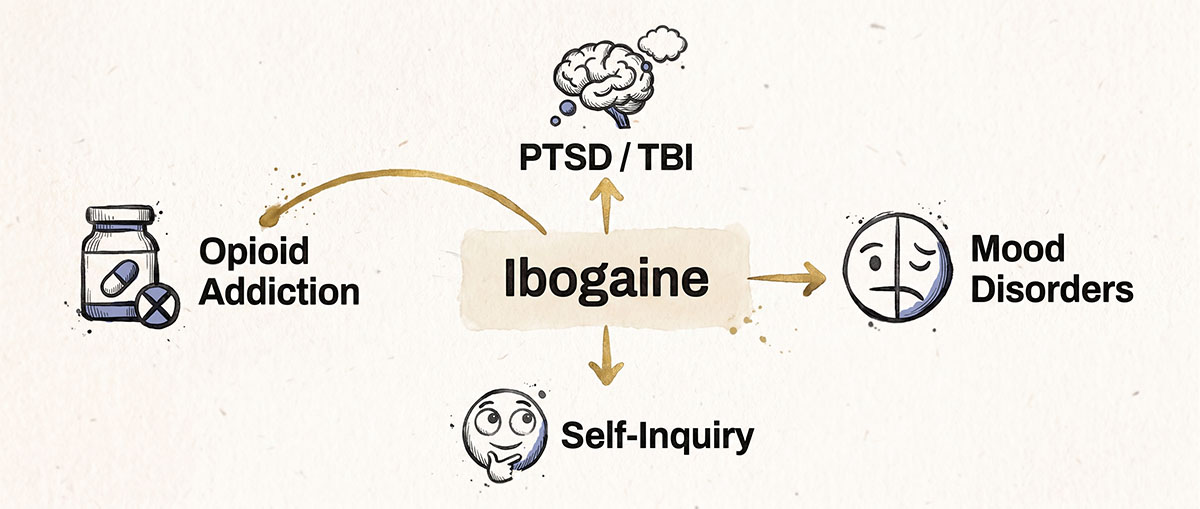
The strongest evidence currently exists in three areas: opioid use disorder, other substance use disorders, and trauma-related conditions including PTSD and traumatic brain injury. There's also meaningful emerging evidence for treatment-resistant depression. People have used it for other mood disorders and for personal exploration with striking success as well, all of which we dive into in the full course.
Opioid addiction
This is ibogaine's most documented effect. People consistently report that a single treatment can eliminate physical withdrawal and dramatically reduce or extinguish craving, something that typically takes weeks or months with conventional detox. Western medicine mostly manages addiction with drugs you take indefinitely. Ibogaine works on a different model entirely: one intensive experience intended to interrupt a pattern rather than manage it. That's a genuinely unfamiliar idea, and it's worth sitting with.
PTSD and traumatic brain injury
A landmark Stanford study of special operations veterans, published in Nature Medicine, found marked improvements across PTSD, depression, and anxiety measures after a single treatment, along with cognitive improvements in a population with documented TBI, and no serious adverse events in a closely monitored protocol. This study is a big part of why ibogaine research is accelerating right now.
Depression, anxiety, and the simply curious
Clinical experience and smaller studies suggest benefit for treatment-resistant depression, though the evidence base here is thinner, and I'd rather tell you that now than overstate it. And some people come to ibogaine with no diagnosis at all, drawn to it for growth and self-inquiry. I'm in that category, and it's how the documentary happened. If that's you, you're not an edge case.
The ExperienceWhat the experience is actually like
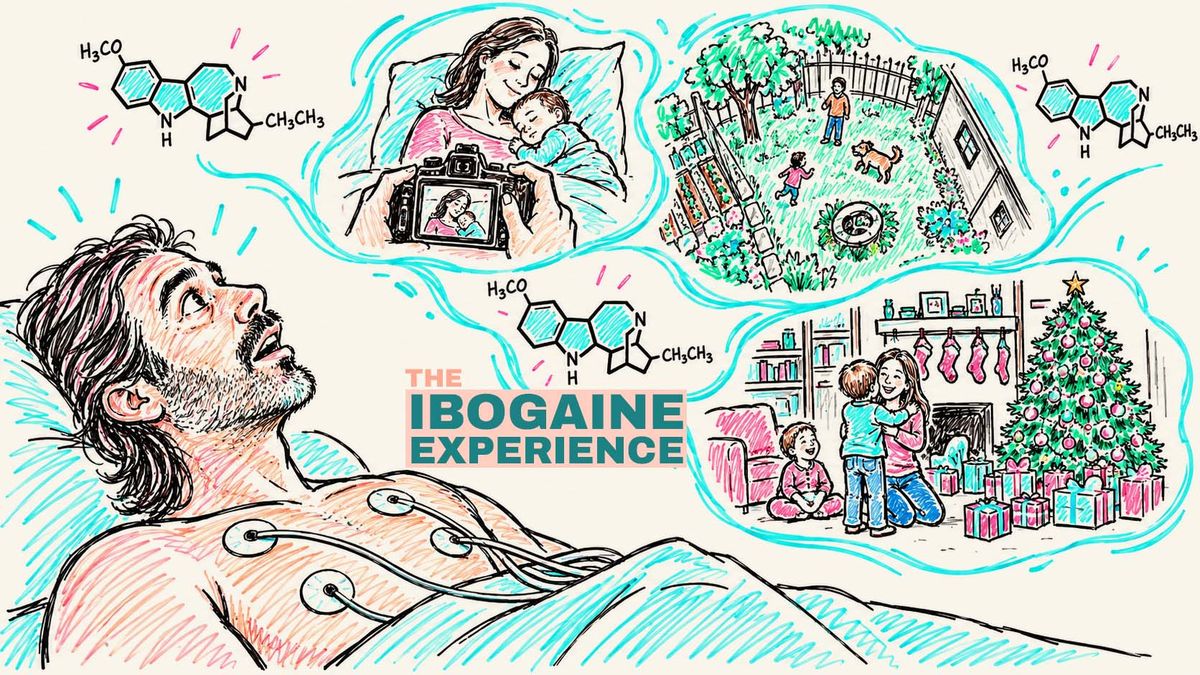
The experience typically unfolds over 18 to 36 hours, and most people describe it as the most intense experience of their life. Not always pleasant, but always meaningful. It moves through phases: a rising build over the first hours, then an acute “visionary” phase that people describe as dreaming while awake. Unlike most psychedelics, the visions aren't usually fantastical. People watch scenes from their own lives play out with unusual clarity and emotional depth, often from an observer's perspective, a phenomenon usually called the life review. I outlined the general arc below.
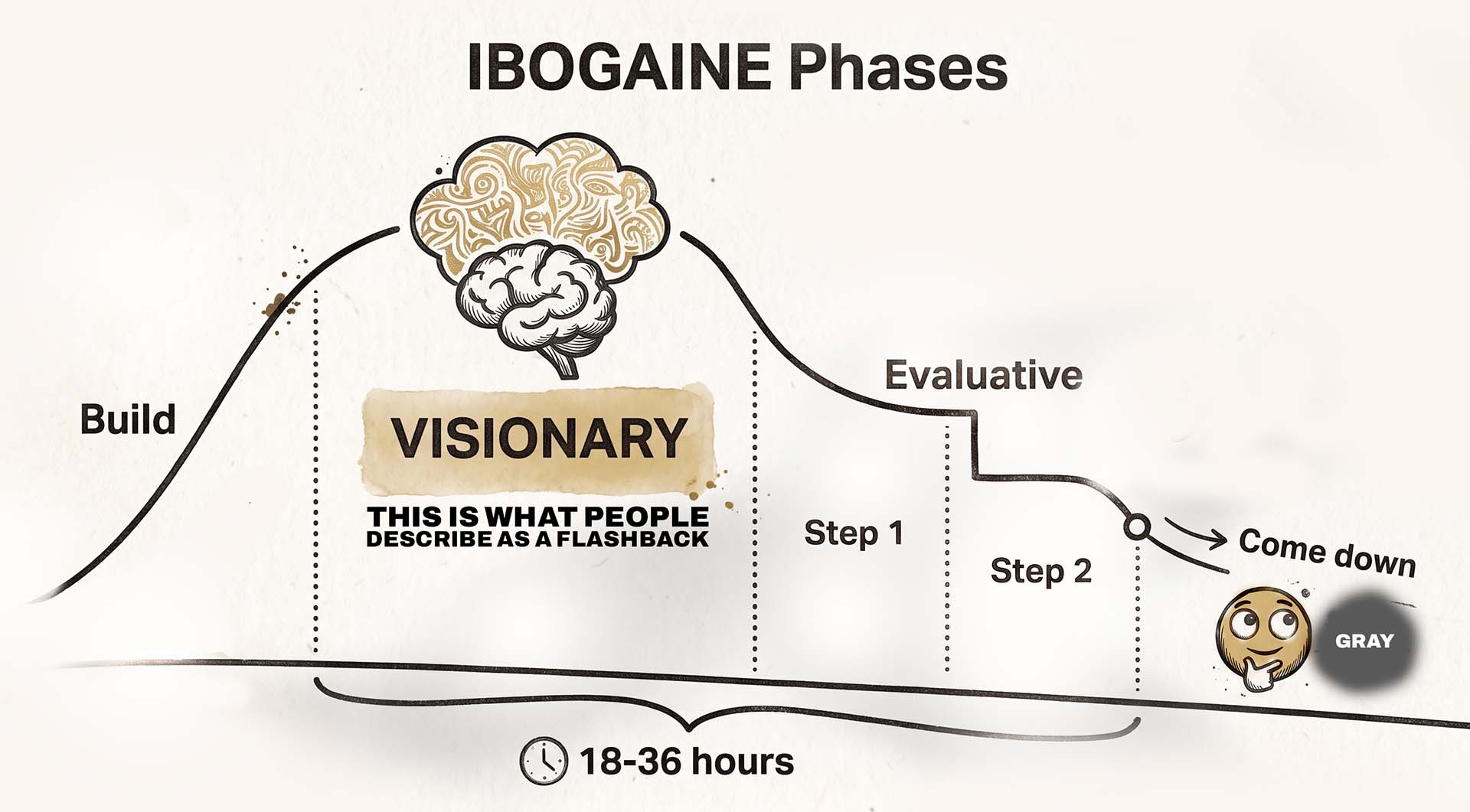
Then comes a long, clear-eyed evaluative phase, more contemplation than trip, where much of the psychological work seems to happen. Afterward: deep exhaustion for some time and often an afterglow of clarity and openness. Physically it's demanding. You lose coordination completely, your heart is under measurable stress, and that's exactly why this only happens lying down, under continuous medical monitoring.
One more thing I tell everyone: the experience itself is not the whole story. Most of what determines whether someone's life actually changes happens in the days, weeks, and months after treatment. Integration isn't an add-on. It might just be the point.
Is ibogaine safe? The answer nobody should dodge
This is the exact topic I sat down to discuss with a guide who has prepared thousands of people for ibogaine and other psychedelic journeys. There are real dangers here that everyone points out, and this is the clearest way I know to describe them.
Here's the honest answer: ibogaine carries significant risks, and whether it's safe depends enormously on how it's administered, by whom, and for whom. That means you, as a patient, need to find an organization that holds safety as its highest priority.
The most serious risk is cardiac. Ibogaine prolongs the QT interval, an electrical timing measure in the heart, in a way that can trigger life-threatening arrhythmias in vulnerable people. Deaths have occurred, and here's what matters about them: a large share happened in people with undiagnosed cardiac conditions or dangerous medication interactions, in settings without proper medical oversight. Those deaths were not inevitable. They were the result of inadequate screening and insufficient monitoring.
In settings with comprehensive cardiac screening, continuous monitoring, and trained staff, serious adverse events are rare. That's why I say, in the ibogaine course and everywhere else: of everything within your control, provider quality is the single most important safety decision you will make. An ECG before treatment is not just nice to have - it’s a must. Any provider who skips it is unsafe, full stop.
You cannot make ibogaine safe through personal preparation alone. You need a provider who takes safety as seriously as you do, and you need to know exactly what questions to ask them. That's why we made our clinic vetting checklist free. It's at the bottom of this page.
Where ibogaine stands legally
In the United States, ibogaine has been a Schedule I substance since 1970, so it can't be legally administered outside of approved research. That's why most people who pursue treatment travel abroad, most commonly to Mexico, where clinics operate legally, with enormous variation in quality.
But this is the part of the story moving fastest. Texas has committed $50 million to fund ibogaine clinical trials for veterans, the FDA has cleared ibogaine for investigational study, and a 2026 federal executive order named ibogaine specifically in a push to accelerate psychedelic research. After decades on the fringe, ibogaine is finally being studied the way it deserves. Which is why this page and the overal education we’re doing exists.
Research & News · Updated Aug 2026The ibogaine research log
Ibogaine science is moving faster right now than at any point in our lifetime, and most coverage of it is either hype or fear. Here is a running log of studies, articles, and developments worth your time.
First public-facing ibogaine course is released
A new course on how patients can prepare for an ibogaine journey, produced by Rob and Haley Nelson (us - shameless plug here) to fill a gap that otherwise existed in the education around experiences like this.
Federal executive order fast-tracks psychedelic research, and names ibogaine
A new executive order directs agencies to accelerate psychedelic research with $50 million in funding, and the FDA has issued investigational new drug clearance for ibogaine, opening the door to US clinical trials.
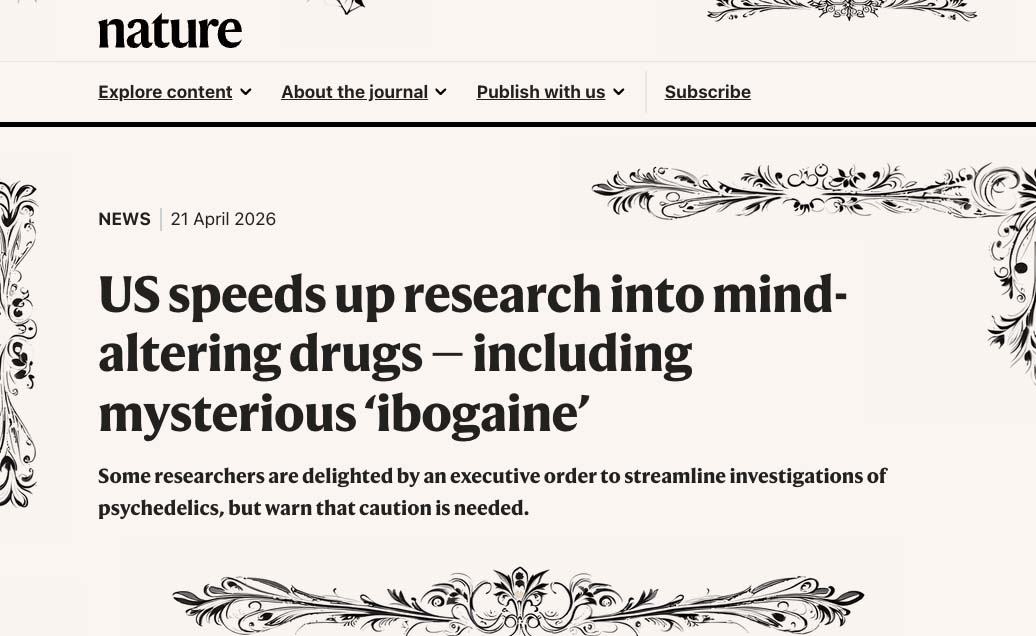
Nature: US speeds up research into mind-altering drugs, including ibogaine
Nature's news team covers the same shift from the researchers' side: real excitement about streamlined study of a long-restricted compound, paired with clear warnings that caution is still needed.
Texas launches its own ibogaine clinical trial program
Backed by the state's $50 million appropriation, Texas is running its own FDA-grade research effort focused on veterans with PTSD and TBI. State-funded psychedelic drug development is genuinely new territory.
The landmark Stanford study: magnesium–ibogaine therapy in veterans (Nature Medicine)
The MISTIC study of 30 special operations veterans that put ibogaine on mainstream medicine's radar: large reductions in PTSD, depression, and anxiety plus cognitive improvements, with no serious adverse events under monitoring.
Stay in the loop and get the free clinic vetting checklist
Drop your name and email and we'll keep you updated as the research unfolds. No hype, no spam, just the developments that actually matter. As a thank-you, we'll immediately send you our free Provider Vetting Checklist: the exact cardiac screening, staffing, and safety questions to ask any ibogaine clinic before trusting them with your life.
Check your inbox.
The checklist is on its way. Look for an email from Rob Nelson in the next few minutes, and if it isn't there, check your Promotions or Spam folder.
One email now with the checklist, two short follow-ups after. Unsubscribe anytime.
Common questions
Is ibogaine legal in the United States?
No. It's a Schedule I substance, so it can't be legally administered outside approved research. Most people who pursue treatment travel to countries like Mexico, where clinics operate legally. US research access is expanding quickly as of 2026.
Is ibogaine a psychedelic?
Sort of, and mostly not. It's in the same tryptamine family as psilocybin, but it works through many receptor systems at once, lasts far longer, and produces a dreamlike, autobiographical experience rather than a perceptual one. Researchers often call it an oneirogen, meaning a dream-inducer.
How long does an ibogaine experience last?
The acute experience is typically 18 to 36 hours, followed by days to weeks of afterglow driven by its long-lasting metabolite, noribogaine. Plan for at least a 3-day experience plus a week or more of rest afterward.
Is ibogaine safe?
It carries real cardiac risks that must not be overlooked. Those risks are substantially mitigated by proper screening and continuous medical monitoring. Cardiac screening via an ECG is non-negotiable. Provider quality is the single most important safety variable.
Does ibogaine cure addiction?
No treatment cures addiction. Ibogaine can eliminate acute opioid withdrawal and interrupt the addiction cycle in a way nothing else does, but it's a catalyst, not a cure. Lasting change depends on integration and aftercare.
Want the whole picture, in 7 easy to watch lessons?
This page is part of our free ibogaine education. The full ibogaine course is designed to give you everything you need to know before you go to a clinic, in order, and without anything missing. You'll learn neuroscience, honest self-assessment, how to vet a provider, what the experience is like phase by phase, and the integration work that makes it last. It's all taught in easy to watch video form with clinicians, researchers, and people who've lived it. I provide a money back guarantee because I know it’s worth the investment. Check it out now!
Explore the Ibogaine Course →This page is for educational purposes only and does not constitute medical advice. Always consult qualified medical professionals before considering ibogaine treatment. Ibogaine carries serious risks, including cardiac events. Please review all safety information carefully.